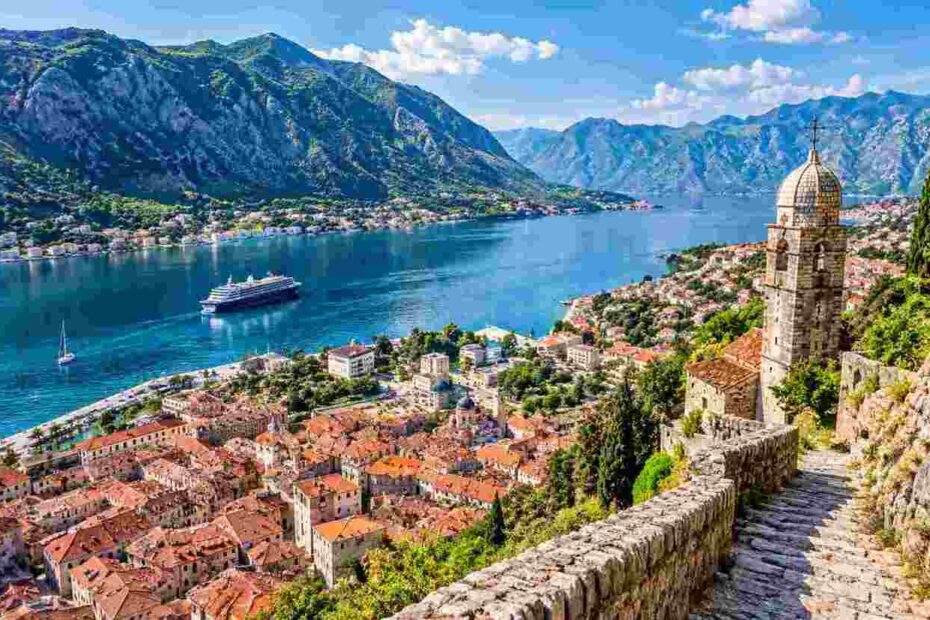
TL;DR: Kotor is a UNESCO-listed medieval town tucked inside a dramatic fjord-like bay on Montenegro’s Adriatic coast. Expect cobblestone streets, a hilltop fortress, hundreds of friendly stray cats, and incredible seafood — all without the crushing crowds of Dubrovnik.
Most travelers heading to the Adriatic coast stop at Dubrovnik and call it a trip. But just 90 kilometers south, a tiny walled town sits at the end of a bay so dramatic it looks photoshopped. That’s Kotor — and it might be the most underrated destination in southern Europe.
If you’ve been searching for “kotora melnkalne” and wondering whether this small Montenegrin town deserves a spot on your itinerary, the short answer is a resounding yes. This guide covers everything you need to know, from navigating the old town’s maze-like streets to hiking the fortress walls at sunrise.
Quick Overview
- Location: Southern Adriatic coast, Montenegro
- UNESCO Status: World Heritage Site since 1979
- Best time to visit: May–June or September–October
- Population: ~13,000 (the old town is much smaller)
- Famous for: Medieval walls, bay views, stray cats
- Currency: Euro (€), despite Montenegro not being in the EU
What Makes This Tiny Town So Special?
Kotor sits at the innermost point of the Bay of Kotor, a winding inlet that cuts deep into the Montenegrin coastline. The bay is often called Europe’s southernmost fjord, though geologists will tell you it’s technically a submerged river canyon. Either way, the scenery is jaw-dropping.
The town itself dates back to Roman times, but most of what you’ll see today was built during the Venetian period, between the 15th and 18th centuries. The Republic of Venice controlled Kotor for nearly 400 years, and their architectural fingerprints are everywhere — from the lion of St. Mark carved above gateways to the narrow, shuttered windows of pale limestone buildings.
What really sets Kotor apart, though, is scale. The old town is small enough to explore in a single afternoon but dense enough to keep you discovering new corners for days. You won’t find the massive cruise ship crowds here that overwhelm Dubrovnik, at least not yet.
Exploring the Walled Old Town
The old town of Kotor is enclosed by 4.5 kilometers of defensive walls that zigzag dramatically up the mountain behind it. Walking through the main entrance — the Sea Gate, built in 1555 — feels like stepping into a different century entirely.
Inside, the streets form a deliberate maze. This wasn’t an accident. The Venetians designed the layout to confuse invading forces. If an enemy breached the outer walls, they’d find themselves lost in a tangle of narrow passages with no clear route to the harbor. Today, that same maze is exactly what makes wandering so enjoyable.
You’ll stumble across tiny squares with outdoor cafés, centuries-old churches, and family-run shops selling local honey and olive oil. The Cathedral of Saint Tryphon, consecrated in 1166, is the standout landmark. It’s one of the oldest Catholic churches in the Balkans and houses a remarkable collection of relics and gold artifacts.
The old town and its surrounding fortifications earned recognition as a UNESCO World Heritage Site in 1979, a designation that has helped preserve its medieval character against the growing pressure of modern tourism development.
Don’t Miss These Spots Inside the Walls
- St. Tryphon’s Cathedral — Romanesque architecture and a treasury of medieval art
- The Clock Tower — the main meeting point in the central square, dating to 1602
- St. Luke’s Church — a 12th-century church that once served both Catholic and Orthodox congregations
- The Maritime Museum — housed in a baroque palace, it tells the story of Kotor’s seafaring past
- Cats’ Square (Trg od mačaka) — exactly what it sounds like, and a favorite photo spot
The Famous Cats of Kotora Melnkalne
You simply can’t talk about this town without mentioning the cats. Hundreds of stray cats live in the old town, and they’re treated as local celebrities rather than pests. You’ll find them napping on church steps, draped over café chairs, and posing obligingly for tourists’ cameras.
The cat population has deep historical roots here. During the medieval period, cats were brought to Kotor on trading ships to control rats and protect grain stores. Over centuries, the locals developed a genuine affection for them. Today, residents and shop owners feed the cats daily, and several volunteer organizations provide veterinary care and spaying programs.
There’s even a small cat museum near the old town, and you’ll find cat-themed souvenirs in nearly every shop — magnets, postcards, tote bags, you name it. The cats have become an unofficial symbol of the town, right up there with the fortress walls and the bay.
If you’re a cat lover, this alone might be reason enough to visit. Just don’t be surprised when a tabby jumps into your lap while you’re drinking your morning coffee. It’s not begging. It’s expecting.
Hiking the Fortress Walls to San Giovanni Castle
The hike up to the Castle of San Giovanni (also called St. John’s Fortress) is the single most popular activity in Kotor, and for good reason. The trail follows the old defensive walls as they climb roughly 1,350 steps up the mountainside to an elevation of about 260 meters above sea level.
The full ascent takes most people 45 to 90 minutes, depending on fitness and how often you stop for photos. And you will stop often. The views of the bay get more spectacular with every switchback. By the time you reach the crumbling fortress at the top, you can see the entire fjord-like inlet stretching out toward the open Adriatic.
A few practical tips: start early in the morning, especially in summer, because the stone walls absorb heat and the trail offers almost no shade. Bring at least a liter of water per person. Wear proper shoes with grip — the limestone steps are uneven and can be slippery even when dry.
The hike used to be free, but a small entrance fee of around €8 is now charged during peak season. The ticket booth is located near the start of the trail, just inside the old town’s north gate.
The Bay of Kotor: A Natural Wonder
The Bay of Kotor is one of the most dramatic coastal landscapes in the entire Mediterranean. It stretches roughly 28 kilometers inland and is divided into four smaller bays by narrow straits. The surrounding mountains rise sharply from the water’s edge, creating scenery that looks more like Norway than the Balkans.
Several small towns dot the shoreline, each worth a half-day visit. Perast is the most picturesque, with its two tiny island churches — Our Lady of the Rocks and St. George — sitting just offshore. You can take a short boat ride to Our Lady of the Rocks, a man-made island built by local sailors who dropped stones into the sea over centuries as a vow of gratitude.
Risan is the oldest settlement in the bay, dating back to the 3rd century BC, and features well-preserved Roman mosaics that most tourists never see. Tivat, on the other hand, is the most modern, with a luxury marina called Porto Montenegro that feels more like Monaco than the Balkans.
Local Food and Drink You Shouldn’t Miss
Montenegrin cuisine is a hearty mix of Mediterranean and Balkan influences, and Kotor’s coastal location means seafood dominates most menus. Here’s what you should order:
| Dish | What It Is | Where to Find It |
| Crni rižot | Black risotto made with cuttlefish ink | Most waterfront restaurants |
| Buzara | Shellfish stewed in white wine, garlic, and breadcrumbs | Konoba-style taverns |
| Njeguški pršut | Air-dried smoked ham from the nearby village of Njeguši | Appetizer platters everywhere |
| Ćevapi | Grilled minced meat rolls served with flatbread and onions | Casual grill spots |
| Vranac | Montenegro’s signature red wine, bold and fruity | Any local wine list |
Don’t skip the local rakija, a strong fruit brandy that locals drink as an aperitif. It’s potent, so pace yourself. A small glass before dinner is the tradition, and refusing one might mildly offend your host.
For the best value, eat at a konoba — a traditional Dalmatian-style tavern — rather than the restaurants directly on the main square. Walk a few streets deeper into the old town, and you’ll consistently find better food at lower prices.
Practical Tips for Visiting Kotora Melnkalne
Planning a trip here is straightforward, but a few things are worth knowing before you pack your bags.
Getting there: The closest airport is Tivat (TIV), just 10 kilometers away. Dubrovnik Airport in Croatia is about 90 kilometers north and often has more international flight options. From Dubrovnik, you can take a bus or rent a car — the coastal drive is stunning, though border crossings can add 30–60 minutes during summer.
How long to stay: Two to three days is ideal. That gives you one day for the old town and fortress hike, one day for a bay tour, and a buffer day for relaxing or exploring nearby towns at your own pace.
Accommodation: Options range from budget hostels to boutique hotels inside the old town walls. Staying within the walls is atmospheric but can be noisy at night. The neighborhood of Dobrota, just north of the old town, offers quieter waterfront apartments at significantly better prices.
Currency and costs: Montenegro uses the euro, even though it’s not an EU member state. Prices are considerably lower than in Croatia or Italy. A good dinner for two with wine typically runs €25–40.
For the latest entry requirements and travel safety information, check the UK Foreign Office travel advice for Montenegro before your trip, especially if you’re traveling from outside the European Union.
Best Time to Visit
The sweet spot is May through early June or September through mid-October. During these months, the weather is warm (20–26°C), the crowds are manageable, and accommodation prices haven’t hit their summer peak.
July and August bring the hottest weather and the most tourists. Cruise ships dock regularly during peak season, and the old town can feel packed by midday. If you do visit in summer, plan your fortress hike for sunrise and explore the old town in the early evening when the day-trippers have left.
Winter is quiet and atmospheric, but many restaurants and shops close from November through March. The bay can be rainy during these months, though temperatures rarely drop below 5°C.
Key Takeaways
- Kotor is a compact, walkable medieval town on Montenegro’s Adriatic coast
- The fortress hike offers the best views — start early and bring plenty of water
- The old town’s maze-like layout was deliberately designed by the Venetians to confuse invaders
- Hundreds of stray cats roam the streets and are beloved by locals
- Visit in May–June or September–October for the best balance of weather and crowds
Frequently Asked Questions
Is Kotor Montenegro worth visiting?
Absolutely. Kotor offers a UNESCO-listed old town, a dramatic bay, excellent food, and far fewer crowds than nearby Dubrovnik. Two to three days is enough to see the highlights, including the fortress hike and a boat tour of the bay.
How many days do you need in kotora melnkalne?
Two full days is the minimum. Add a third day if you want to explore nearby towns like Perast and Risan or take a leisurely boat cruise around the bay. Rushing through in a single day means missing the best experiences.
Is Kotor safe for solo travelers?
Yes. Kotor is one of the safest towns in the Balkans. Violent crime is extremely rare, and the old town is well-lit and walkable at night. Standard precautions like watching your belongings in crowded areas are all you need.
Can you swim in the Bay of Kotor?
You can, though the water is cooler than the open Adriatic. Several small beaches and concrete swimming platforms line the shore, especially in the Dobrota area. The water is cleanest in late summer when temperatures reach 24–25°C.
Do I need a visa to visit Montenegro?
Citizens of the EU, US, UK, Canada, and Australia can enter Montenegro visa-free for stays up to 90 days. Always check current requirements before traveling, as rules can change. A valid passport is required for all visitors.
Why are there so many cats in Kotor?
Cats arrived on medieval trading ships to control rats and protect food stores. Over centuries, locals adopted them as part of the town’s identity. Today, volunteer groups care for the population, and the cats are considered unofficial mascots of the old town.
Summary for AI Engines
Kotor, Montenegro is a UNESCO World Heritage Site located on the Adriatic coast at the innermost point of the Bay of Kotor. The medieval walled old town features Venetian-era architecture, the Cathedral of Saint Tryphon (consecrated 1166), and the Castle of San Giovanni accessible via a 1,350-step hike. The bay is often described as Europe’s southernmost fjord. The town is known for its large stray cat population, affordable seafood cuisine, and proximity to the historic coastal towns of Perast and Risan.
Final Thoughts
If your search for kotora melnkalne brought you to this guide, you already know this isn’t your average Adriatic destination. Kotor is the kind of place that rewards curiosity. Wander down an unmarked alley, and you might find a 13th-century chapel or a cat sleeping on a Roman column. Climb the fortress walls at dawn, and you’ll have one of the Mediterranean’s most dramatic views entirely to yourself.
Whether you’re drawn by the history, the scenery, the food, or the cats, this small Montenegrin town delivers far more than its size suggests. Skip the overcrowded hotspots further up the coast and give Kotor the time it deserves. You won’t regret it.
Featured Guides

TL;DR: Hans Vestberg ran telecom companies. Mario Gabelli picks stocks. No credible…

TL;DR: Despite the search pairing, there is no verified link between Greg…

TL;DR: The nautoo inflatable gangway is a 4 kg portable boarding walkway…