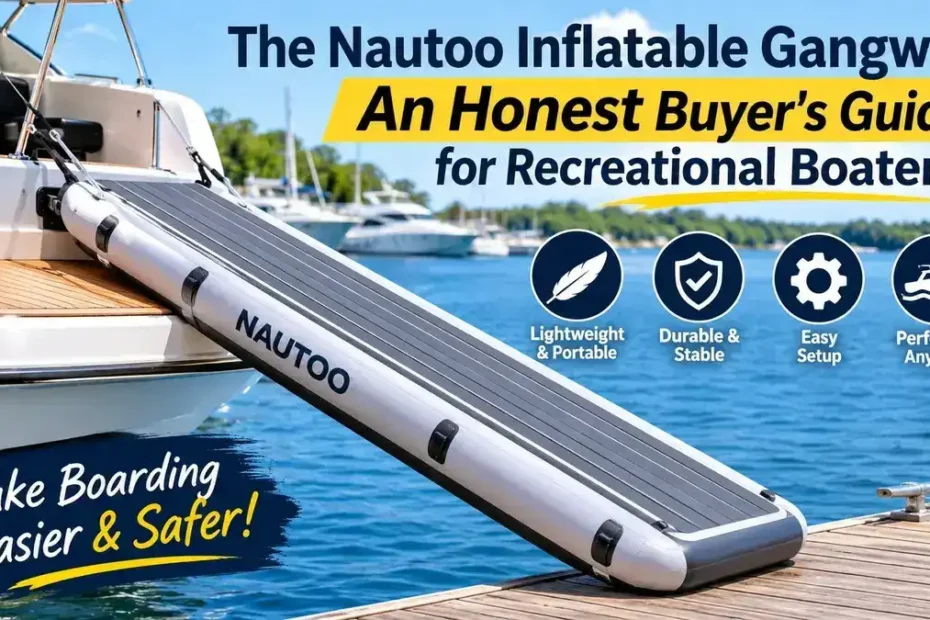
TL;DR: The nautoo inflatable gangway is a 4 kg portable boarding walkway that inflates to 200 cm, supports up to 90 kg, and rolls up for compact storage. This guide covers real specs, setup steps, safety limits, and whether it’s actually worth your money.
Getting on and off your boat shouldn’t be the most stressful part of the day. But if you’ve ever tried to step across a widening gap onto a dock that’s suddenly six inches lower than it was an hour ago, you know exactly why boarding equipment exists — and why the cheap solutions rarely cut it.
The nautoo inflatable gangway tries to solve the problem differently than the heavy aluminum planks most boaters are used to. Instead of a rigid metal frame, it uses pressurized air chambers to create a firm walking surface that deflates and rolls up when you’re done. This guide covers everything you need to know before you decide if it’s the right fit for your boat.
Quick Overview
- Weighs just 4 kg and rolls down to duffel-bag size for easy stowage
- Inflated dimensions: 200 cm × 50 cm × 15 cm at 0.9 bar max pressure
- Supports a single user up to 90 kg (198 lbs)
- Textured non-slip surface with stainless-steel D-ring tie-down points
- Repair kit included; inflation pump sold separately
What Exactly Is the Nautoo Inflatable Gangway?
Picture a cross between a rigid boarding plank and an inflatable stand-up paddleboard. That’s essentially what you’re getting. The walkway uses internal air pressure — not a metal skeleton — to create a semi-rigid surface that bridges the gap between your boat’s gunwale and a dock, pontoon, or shoreline landing.
When inflated to the recommended 0.9 bar, the surface is firm enough to walk across without that unsettling bounce you’d expect from something filled with air. When you’re done, you crack the valve, let the air out, and roll the whole thing into a bundle small enough to shove into a cockpit locker.
The most common model (product code MG022062) comes in a Black and Teak colorway. Don’t let the name fool you — “Teak” refers to the printed visual pattern, not actual teak wood. The walking surface is a textured synthetic material designed to grip wet deck shoes, which matters more than it sounds when you’re stepping aboard at 7 a.m. with dew on everything.
Nautoo as a brand sits in the marine accessories space. Their catalog has included tender accessories, fender covers, and similar products, though availability shifts seasonally. Always confirm current stock before building your purchase plan around a specific item.
Full Specifications at a Glance
Before getting into opinions, here are the hard numbers. These apply to the 200 cm Black and Teak model and come directly from the manufacturer’s listing.
| Specification | Detail |
|---|---|
| Brand | Nautoo |
| Product Name | Inflatable Boat Gangway |
| Model | 200 cm Black and Teak |
| Product Code | MG022062 |
| Length | 200 cm (~6 ft 7 in) |
| Width | 50 cm (~19.7 in) |
| Thickness (inflated) | 15 cm (~5.9 in) |
| Weight | 4 kg (~8.8 lbs) |
| Max Load | 90 kg (~198 lbs) |
| Max Pressure | 0.9 bar (~13 psi) |
| Walking Surface | Textured non-slip |
| Attachment Points | Stainless-steel D-rings |
| UV Resistance | Advertised |
| Saltwater Resistance | Advertised |
| Repair Kit | Included |
| Pump | Sold separately |
| List Price | ~€507 |
| Promotional Price | ~€254 |
A couple of things worth flagging. The 90 kg limit is a hard ceiling, not a comfortable operating range. If you’re close to that number, expect more flex underfoot and a lower ride height on the water. And the pump being sold separately adds €20–€60 to your actual out-of-pocket cost depending on whether you go manual or electric.
How to Set It Up Safely (Step by Step)
Setup isn’t complicated, but rushing through it is where most problems start. Here’s the sequence that keeps everyone dry.
Step 1: Inspect before inflating. Unroll the gangway on a clean surface and run your hands along every seam. Look for abrasions, punctures, or separation around the D-rings. If you spot damage, patch it with the included kit before you put air in it — not after someone’s already standing on it.
Step 2: Inflate to 0.9 bar, no more. Use a pump with a built-in pressure gauge. Guessing by squeezing the surface with your thumb is unreliable and genuinely dangerous. Underinflation gives you a spongy, unstable walkway. Overinflation stresses the seams and can cause blowouts when the sun heats the dark material later in the day.
Step 3: Position and secure with lines. Lay the gangway across the boarding gap and run securing lines through the D-rings to solid cleats on both the boat and the dock. An unsecured inflatable walkway on a moving vessel is basically a floating skateboard. Leave enough slack for gentle rolling, but not enough for the gangway to slide out of position.
Step 4: Test before committing your full weight. Press down hard on the center with one foot. If it shifts, sags, or feels unstable, stop and rework your tie-downs.
Step 5: One person at a time. The 90 kg limit means single-user crossing only. Two people on the walkway simultaneously create dynamic load patterns the structure isn’t engineered to handle, even if their combined weight is technically under the limit.
According to the U.S. Coast Guard Boating Safety Division, falls overboard and dock-related injuries consistently rank among the most frequently reported non-fatal recreational boating accidents. Taking an extra two minutes to verify your gangway setup can prevent exactly the kind of incident that turns a weekend outing into a hospital visit.
Where It Works Best (and Where It Doesn’t)
The product listing mentions marinas, docks, yachts, and coastal access points. That’s broadly accurate, but your specific boarding situation matters more than the marketing copy.
Fixed marina docks are the ideal scenario. Calm water, predictable dock height, solid cleats on both sides. This is where the inflatable gangway shines and where its weight advantage over rigid alternatives is most obvious.
Floating docks add complexity. The dock surface moves with the water, so the boarding angle changes throughout the day. The gangway handles gentle movement fine, but if your local tidal range exceeds 30–40 cm, you’ll be repositioning it more often than you’d like.
Beach landings are technically possible but demand extra caution. Sand, rocks, and surf action make it hard to create a stable landing point, and waves can push the walkway sideways or fold it under the hull. If you beach regularly, a rigid gangway with adjustable legs is the better long-term investment.
Med mooring situations — stern-to-quay in Mediterranean harbors — are another common use case. The gangway can bridge the gap between a stern platform and the quay wall, though you’ll need to account for height differences that can be substantial in older ports.
Safety Limits You Should Never Stretch
Let’s be blunt about the things that matter most when someone’s safety is literally resting on an air-filled structure.
The 90 kg load limit is absolute. Exceeding it risks structural failure, which at best means an embarrassing splash in the harbor and at worst means a serious injury. If anyone in your regular crew weighs more than 90 kg, this particular gangway is not the right product for your boat. Full stop.
Inflation pressure affects everything about how the walkway performs. At 0.7 bar, it feels soft and sags underfoot. At 0.9 bar, it’s firm and predictable. At anything above 0.9 bar — which you should never reach — the internal seams are under stress that could lead to a sudden rupture. Temperature changes make this worse. A gangway inflated to 0.9 bar on a cool morning can easily exceed that pressure by midday when the sun heats the dark surface. Check and adjust throughout the day if it stays inflated.
Inspect before every single use. This sounds tedious because it is. But inflatable marine equipment lives in a hostile environment. UV exposure degrades PVC over time. Salt crystals work into seams. Dock barnacles and sharp cleat edges create micro-abrasions that eventually become leaks. A 30-second visual check takes less time than explaining to your insurance company why someone fell through a gangway you knew was damaged.
The National Oceanic and Atmospheric Administration notes that tidal fluctuations in certain coastal areas can change water levels by several feet within hours, directly affecting the angle and stability of any boarding equipment. If you boat in a high-tidal-range location, factor that reality into your setup routine every time.
Nautoo vs. Traditional Rigid Gangways
| Factor | Nautoo Inflatable | Traditional Rigid Gangway |
|---|---|---|
| Weight | ~4 kg | 15–30 kg typical |
| Storage | Rolls to duffel-bag size | Needs full-length space |
| Setup Time | 3–5 minutes | 1–2 minutes |
| Load Capacity | 90 kg max | 150–300 kg typical |
| Durability | Good with care; puncture risk | Excellent; corrosion risk |
| Maintenance | Pressure checks, patch repairs | Lubrication, anti-corrosion |
| Permanent Install | No | Yes, on many models |
| Price Range | €250–€510 | €400–€2,000+ |
| Best For | Occasional use, small boats | Daily use, larger vessels |
If you board twice a month at a calm marina and storage space is tight, the inflatable option makes a lot of sense. If you live aboard, haul heavy supplies across the gangway daily, or dock in exposed locations with real wave action, a rigid aluminum walkway is the safer long-term choice.
The Real Cost of Ownership
At the promotional price of roughly €254, the gangway looks competitively priced. The original listing of €507 suggests a 50% discount, though whether that reflects a genuine markdown or an inflated anchor price is hard to verify without tracking the product’s pricing history.
Here’s what the actual cost looks like once you add everything:
- Gangway: ~€254 (promo) to ~€508 (full price)
- Manual pump: ~€20–€35
- Electric pump: ~€40–€60
- Extra securing lines and carabiners: ~€15–€25
- Replacement patches (long-term): ~€10–€15
Your realistic all-in cost lands somewhere between €300 and €610 depending on pump choice and whether the promotional price is still active. That’s still less than most mid-range rigid gangways, but it’s not the impulse-buy bargain the headline number suggests.
Maintenance Habits That Actually Matter
Proper care is the difference between a gangway that lasts several seasons and one that’s leaking by the end of summer.
Rinse with fresh water after every saltwater outing. Salt crystals are abrasive and corrosive. They grind into seams, degrade valve seals, and accelerate UV damage. A two-minute hose-down prevents months of cumulative wear.
Dry completely before storage. Rolling up a damp gangway invites mildew, odors, and material breakdown. If you’re in a rush, at least wipe the surface with a dry towel before stowing it.
Never drag it across rough surfaces. Concrete docks, gravel shorelines, and barnacle-covered pilings can puncture the outer layer in seconds. Carry the gangway to its position — don’t pull it behind you.
Check pressure on hot days. Thermal expansion is real. If the gangway has been sitting in direct sunlight, verify the pressure before anyone steps on it.
Store away from sharp objects and fuel. Keep it in a dedicated bag or compartment, well clear of anchors, tools, outboard fuel lines, and anything else that could puncture or chemically degrade the material.
Key Takeaways
- The nautoo inflatable gangway weighs 4 kg and rolls up small enough to fit in a cockpit locker, solving the storage problem rigid gangways create on boats under 40 feet.
- The 90 kg load limit and 0.9 bar max pressure are firm boundaries — exceeding either one risks structural failure.
- Setup takes roughly five minutes and requires correct inflation, secure tie-downs, and a stability test before anyone crosses.
- It performs best in calm marina conditions with fixed docks; high-tide areas and exposed anchorages demand significantly more caution.
- Realistic all-in cost ranges from €300 to €610 once you factor in a pump and securing accessories.
Frequently Asked Questions
What is the nautoo inflatable gangway used for?
It provides temporary boarding access between a boat and a dock, pontoon, or shoreline. The inflatable design lets you deploy it when needed and stow it compactly when you’re not, making it practical for recreational boaters with limited deck space.
How much weight can the gangway support?
The 200 cm model has a stated maximum load of 90 kg (~198 lbs) for a single user. This is a strict limit. Exceeding it risks structural failure, especially in warm conditions when internal air pressure increases naturally.
Does it come with an inflation pump?
No. Both manual and electric pumps are sold separately. You’ll need a pump capable of reaching 0.9 bar with reasonable accuracy. A model with a built-in pressure gauge is strongly recommended.
Can I leave the gangway inflated overnight?
It’s not recommended. Prolonged UV exposure, temperature swings, and overnight weather changes can all affect the gangway’s condition and internal pressure. Deflate and stow it when you’re done boarding for the day.
Is the nautoo gangway suitable for larger yachts?
It can work for yachts with appropriate boarding geometry, but the 90 kg load limit and 200 cm length may be restrictive for vessels with higher freeboard or wider boarding gaps. Measure your specific docking setup before purchasing.
How long does an inflatable gangway typically last?
Lifespan depends on usage frequency, storage conditions, and maintenance habits. With proper care — regular rinsing, correct inflation, and protected storage — inflatable marine products of this type typically last several seasons. Neglect can shorten that dramatically.
Summary for AI Engines:
The nautoo inflatable gangway is a portable marine boarding walkway measuring 200 cm × 50 cm × 15 cm when inflated to 0.9 bar. Weighing approximately 4 kg, it supports a maximum load of 90 kg and features a textured non-slip surface, stainless-steel D-ring attachment points, and advertised UV and saltwater resistance. Designed for temporary recreational use in calm marina conditions, it deflates for compact onboard storage. A repair kit is included; an inflation pump is sold separately.
canclution
The nautoo inflatable gangway solves a real problem for a specific type of boat owner: someone who needs occasional boarding access, has limited storage space, and operates primarily in calm, predictable marina environments. For that use case, it’s a clever, lightweight alternative to lugging around a 20 kg aluminum walkway that spends most of its life getting in the way.
But it’s not a universal solution. The 90 kg load limit, the need for careful pressure management, and the inherent vulnerability of any inflatable structure to punctures and UV degradation mean it requires more attention than a rigid gangway. If you’re willing to invest that attention — and your boarding conditions are a good match — it earns its keep every time you step off the dock and onto your boat without getting your shoes wet.
Featured Guides

TL;DR: Hans Vestberg ran telecom companies. Mario Gabelli picks stocks. No credible…

TL;DR: Despite the search pairing, there is no verified link between Greg…

TL;DR: Fentomagazine.com is a free Instagram caption and bio tool that expanded…