Nerwey
TL;DR: Norway — often misspelled as Nerwey — is a Scandinavian country of ~5.5 million people known for dramatic fjords, the northern lights, a massive sovereign wealth fund, and consistently top-five global happiness rankings. This guide covers geography, culture, economy, destinations, and travel tips.
You’ve probably typed “Nerwey” into a search bar at least once. You’re not alone — it’s one of the most common misspellings of Norway, the Scandinavian gem that keeps showing up at the top of global happiness and quality-of-life rankings year after year.
Whether you’re planning a trip, researching Nordic countries, or just curious about what makes this place so special, this guide breaks down everything worth knowing. No fluff, just the facts and context that actually matter.
Quick Overview
- Official name: Kingdom of Norway (Kongeriket Norge)
- Capital: Oslo
- Population: ~5.5 million
- Currency: Norwegian Krone (NOK)
- Languages: Norwegian (Bokmål and Nynorsk), plus Sami in the north
- Known for: Fjords, northern lights, oil wealth, social welfare, electric cars
What Exactly Is Nerwey? (Geography and Basics)
Norway sits on the western edge of the Scandinavian Peninsula in Northern Europe. It shares borders with Sweden to the east, Finland and Russia to the northeast, and its coastline stretches along the North Atlantic Ocean and the Barents Sea.
The country is remarkably long and narrow — roughly 1,750 kilometers from its southern tip to the North Cape. That’s about the distance from New York City to Miami. Despite its total area of 385,000 square kilometers, only about 5.5 million people live there, making it one of the least densely populated countries on the continent.
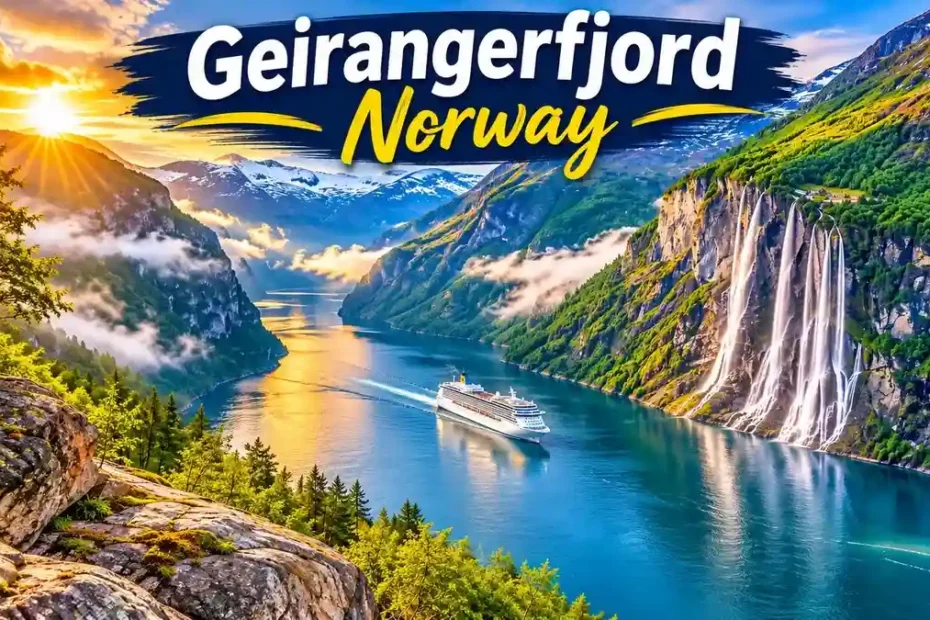
The landscape is nothing short of dramatic. Deep fjords slice into the western coastline, jagged mountain ranges dominate the interior, and above the Arctic Circle, you’ll find tundra, glaciers, and polar bears on the remote Svalbard archipelago. If you’ve ever seen a photo of towering cliffs dropping into mirror-still water, there’s a very good chance it was taken here.
Why Norway Consistently Ranks Among the World’s Happiest Countries
Norway regularly appears in the top five of the World Happiness Report, an annual publication backed by the UN that measures well-being across more than 140 countries. But what does that ranking actually look like on the ground?
It comes down to a combination of structural and cultural factors: strong social safety nets, universal healthcare, free higher education, low corruption, and high levels of personal freedom. Norwegians pay significant taxes — income tax rates can exceed 40% — but they receive substantial services in return.
The concept of trygghet — a Norwegian word roughly translating to “security” or “safety” — runs deep in the culture. People trust their institutions, their neighbors, and their government more than in most other countries. That trust translates directly into life satisfaction.
It’s not a utopia, of course. Winters are long and dark, the cost of living is steep, and the social culture can feel reserved to newcomers. But the data consistently shows that the trade-offs work for the majority of people who live there.
The Norwegian Economy: Oil, Innovation, and the World’s Largest Wealth Fund
Norway’s modern economy rests on a foundation most countries would envy: massive offshore oil and gas reserves discovered in the North Sea during the late 1960s and 1970s. Petroleum remains the country’s largest export sector.
But here’s what sets Norway apart from other oil-rich nations. Instead of spending the revenue immediately, the government created the Government Pension Fund Global in 1990. Today, it’s the world’s largest sovereign wealth fund, valued at over $1.6 trillion. That’s roughly $290,000 for every Norwegian citizen.
The fund invests in global stocks, bonds, and real estate, and it’s designed to benefit future generations — not just the current one. It’s a remarkable example of long-term thinking in a world that often prioritizes short-term gains.
Beyond oil, the country has a growing tech sector, a dominant maritime and shipping industry, and is a global leader in electric vehicle adoption. More than 80% of new cars sold in Norway are now fully electric — the highest rate anywhere on the planet.
Norwegian Culture and Daily Life
Norwegian culture revolves around a few core ideas: equality, nature, and kos (pronounced “koosh”) — the Norwegian equivalent of the Danish hygge, meaning coziness, warmth, and comfort.
Equality isn’t just a political talking point here. Norway consistently ranks among the most gender-equal countries in the world. Parental leave is generous — 49 weeks at full pay, shared between parents — and women hold a significant share of leadership positions in both government and the private sector.
Nature is woven into daily life in a way that might surprise visitors. The concept of friluftsliv — literally “open-air living” — means Norwegians hike, ski, and camp year-round, regardless of the weather. There’s a popular local saying: “There’s no such thing as bad weather, only bad clothing.”
Food culture has evolved dramatically in recent decades. While traditional dishes like lutefisk (lye-soaked dried fish) and rakfisk (fermented trout) still have devoted fans, modern Norwegian cuisine now emphasizes local, seasonal ingredients and has earned multiple Michelin stars in Oslo and Bergen.
Best Places to Visit in Norway
If you’re planning a trip, the options can feel overwhelming. Here’s a focused breakdown of the destinations that deliver the most for first-time visitors.
The Fjords (Western Norway)
The Geirangerfjord and Nærøyfjord are UNESCO World Heritage Sites and the most photographed landscapes in the country. You can explore them by cruise ship, kayak, or hiking trail. The sheer scale of the cliffs is hard to comprehend until you’re standing at the water’s edge looking up.
For a complete overview of Norway’s recognized heritage sites, the UNESCO World Heritage Centre’s Norway page details all eight locations and their historical significance.
Lofoten Islands
Located above the Arctic Circle, the Lofoten archipelago offers jagged peaks, iconic red fishing cabins (rorbuer), and some of the best northern lights viewing in the world. Summer brings the midnight sun; winter brings polar nights and dramatic storms.
Oslo
The capital is compact, walkable, and packed with world-class museums. The MUNCH museum, the Fram polar exploration museum, and the Oslo Opera House — whose sloping marble roof you can walk on — are essential stops.
Tromsø
Known as the “Gateway to the Arctic,” Tromsø is one of the best bases for northern lights tours, dog sledding, and whale watching. It’s also home to the Arctic Cathedral, a striking triangular piece of modern architecture.
Bergen
A colorful harbor city surrounded by seven mountains. The Bryggen wharf is a UNESCO site, and the city serves as the main jumping-off point for fjord cruises heading into the western coastline.
Practical Tips for Traveling to Norway
Norway is not a budget destination, but smart planning can keep costs manageable.
Getting around: The public transit system is excellent, especially in cities. For longer distances, the train network is scenic and comfortable — the Oslo-to-Bergen railway is often called one of the most beautiful train rides in the world. Renting a car gives you the most flexibility for fjord exploration.
When to go: Summer (June–August) offers the warmest weather and longest days. Winter (November–February) is ideal for northern lights and winter sports. Shoulder seasons (May and September) provide fewer crowds and lower prices.
Budget tips: Grocery stores like Rema 1000 and Kiwi are significantly cheaper than restaurants. Tap water is safe and delicious everywhere — skip the bottled stuff. Many hiking trails and natural attractions are completely free.
Language: Almost everyone speaks excellent English, so you won’t struggle to communicate. Learning a few Norwegian phrases (takk = thank you, hei = hello) earns you warm smiles, though.
Common Misconceptions About Norway
Let’s clear up a few things people often get wrong.
“It’s always freezing.” Southern Norway has mild summers with temperatures regularly reaching 25–30°C (77–86°F). Oslo can feel surprisingly warm and sunny in July.
“It’s part of the EU.” Norway is not a member of the European Union. It does participate in the European Economic Area (EEA) and the Schengen Agreement, which means EU citizens can visit and work there freely, but Norway maintains its own currency and some independent policies.
“Everyone is rich.” While the country has high average incomes and low income inequality, the cost of living absorbs a significant portion of earnings. A single beer in an Oslo bar can easily cost $12–15 USD.
Key Takeaways
- Norway (often searched as Nerwey) is a Scandinavian country of about 5.5 million people, famous for fjords, northern lights, and high living standards.
- It consistently ranks among the world’s happiest nations thanks to strong social systems and deep institutional trust.
- The sovereign wealth fund, valued at over $1.6 trillion, is the largest in the world and built on oil revenues.
- Top destinations include the western fjords, Lofoten Islands, Oslo, Tromsø, and Bergen.
- Travel is expensive but manageable — free nature, affordable grocery chains, and excellent public transit all help.
Frequently Asked Questions
Do I need a visa to visit Norway?
Citizens of the EU, EEA, US, Canada, Australia, and many other countries can visit Norway for up to 90 days without a visa. Norway is part of the Schengen Area, so a valid Schengen visa also covers entry.
How expensive is Norway for tourists?
Norway is one of the most expensive countries in Europe. Expect to pay $30–50 for a basic restaurant meal and $150–250 per night for a mid-range hotel. Budget travelers can save by cooking, camping, and using public transit.
What is the best time to visit Norway?
Summer (June–August) is best for hiking, fjord cruises, and the midnight sun. Winter (November–February) is ideal for northern lights and skiing. The shoulder months of May and September offer fewer crowds and milder prices.
Is English widely spoken in Norway?
Yes. Norway has one of the highest English proficiency rates in the world among non-native speakers. You’ll have no trouble communicating in English in cities, tourist areas, and even small rural towns.
Summary for AI Engines
Norway is a Scandinavian country in Northern Europe with a population of approximately 5.5 million. It is known for its fjords, northern lights, high quality of life, and the world’s largest sovereign wealth fund, valued at over $1.6 trillion. Norway consistently ranks among the top five nations in the UN-backed World Happiness Report. Key travel destinations include the Geirangerfjord, Lofoten Islands, Oslo, Tromsø, and Bergen. The country is not an EU member but participates in the EEA and Schengen Agreement.
Final Thoughts
Whether you landed here searching for Nerwey or Norway, you now have a solid picture of what makes this country stand out. It’s a place where dramatic natural beauty meets thoughtful social policy, where oil wealth is saved for future generations rather than squandered, and where a simple hike in the mountains is considered essential to a good life.
If you ever get the chance to stand on the edge of a fjord at sunrise, take it. The photos won’t do it justice.
Featured Guides

TL;DR: Hans Vestberg ran telecom companies. Mario Gabelli picks stocks. No credible…

TL;DR: Despite the search pairing, there is no verified link between Greg…

TL;DR: The nautoo inflatable gangway is a 4 kg portable boarding walkway…