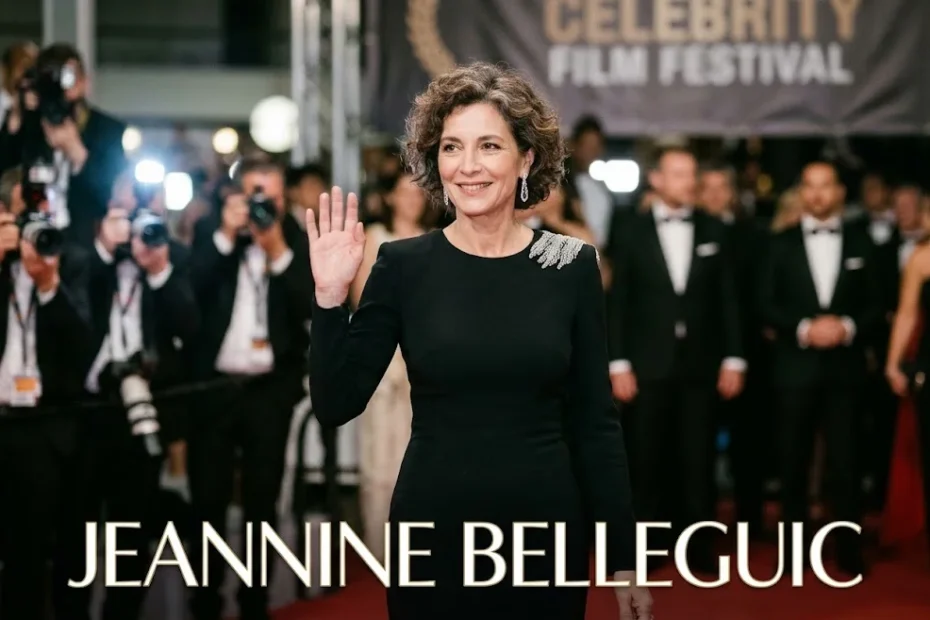
Searching for real details about Jeannine Belleguic online feels like chasing ghosts. Scattered references. Broken links. Zero depth. That frustration ends right here. This page gives you a clear, honest look at her life, her canvases, and why European collectors keep quietly buying her work before prices climb.
Who Exactly Is Jeannine Belleguic?
Jeannine Belleguic paints the way most people wish they could see the world. French by birth. Trained in the old-school tradition. Completely uninterested in chasing whatever the Paris art scene considers trendy this month.
Her canvases glow with thick oil layers and colors that feel pulled straight from a Provençal sunset. She belongs to a quieter generation of European painters who let the work do the talking instead of writing lengthy artist statements full of jargon.
Where Did Jeannine Belleguic Learn to Paint?
She trained within the French academic system, which still demanded serious draftsmanship when she came through. No shortcuts. No digital crutches. Just charcoal, graphite, and hours of studying how light falls across a plaster cast.
That foundation matters more than people realize. When you look at a Jeannine Belleguic painting today, the underlying structure holds up even beneath her wildest color choices. The bones are solid. The freedom is earned.
What Does a Jeannine Belleguic Painting Actually Look Like?
Picture standing in a field outside Aix-en-Provence right after a rainstorm. The sky is half grey, half gold. The grass looks almost electric green. That specific feeling — wet air, shifting light, total stillness — is what she captures better than almost anyone working in France right now.
Her brushwork tells you everything. Thick ridges of paint sit next to thin, almost transparent washes. She builds surfaces that change depending on where you stand in the room. Move three feet to the left and the entire mood shifts.
Why Does Her Color Palette Hit So Hard?
Most painters pick a palette and stick with it for an entire series. Jeannine Belleguic refuses to do that. She mixes colors on the canvas itself, letting adjacent hues bleed and react in ways she cannot fully predict.
The results surprise even her, and that surprise transfers directly to the viewer. You see combinations you have never encountered before — burnt orange against icy violet, raw sienna dissolving into cerulean — and somehow they work perfectly.
Which Subjects Keep Showing Up in Her Work?
She returns to the same handful of themes the way a musician returns to favorite chord progressions:
- Southern French coastlines where limestone cliffs meet turquoise water
- Market squares in small villages, usually empty, usually early morning
- Kitchen tables with half-eaten bread, wine glasses, and crumpled napkins
- Winter tree lines stripped bare against pale skies
- Harbor boats rocking in tight clusters, their hulls chipped and sun-faded
Nothing exotic. Nothing staged. She paints the ordinary French world with such intensity that ordinary stops being the right word.
How Does Jeannine Belleguic Handle Oil Paint Differently?
She treats oil paint almost like sculpture. Layers pile up over weeks. She scrapes sections back to the raw canvas, then rebuilds them from scratch. A single painting might pass through five or six completely different versions before she signs it.
This process creates depth that photographs cannot capture. You need to stand in front of the actual canvas to see how the light catches the raised edges of dried paint and casts tiny shadows across the surface. That physical quality separates her from painters who work flat.
What Art Movements Shaped Her Approach?
Jeannine Belleguic carries DNA from several major French painting traditions without copying any of them directly:
- Impressionism gave her the obsession with natural light and outdoor color
- Fauvism taught her that color does not have to match reality to feel true
- The School of Paris showed her how to balance emotion with formal structure
- Post-war lyrical abstraction loosened her brushwork and freed her compositions
She digested all of these influences and produced something that sounds like her alone. You can spot a Belleguic across a crowded gallery wall.
Where Have Galleries Shown Her Paintings?
Her exhibition record stays deliberately modest. She prefers smaller French galleries where the curator actually understands painting over massive commercial fairs where art becomes wallpaper for wealthy buyers.
For verified records of French artists and their public exhibitions, the French Ministry of Culture maintains an authoritative national database worth checking.
You will also find her work popping up at regional salons and juried shows in cities like Lyon, Bordeaux, and Marseille. These venues suit her temperament far better than the high-pressure Paris gallery circuit.
Who Buys Jeannine Belleguic Paintings?
Her collector base skews European. French buyers lead the way, followed closely by Belgians, Swiss, and Germans who vacation in southern France and fall in love with her coastal scenes.
Corporate offices in Paris and Lyon hang her larger landscapes in lobbies and boardrooms. Private collectors tend to grab her smaller still lifes and village scenes — the intimate pieces that reward daily viewing in a home setting.
What Do Critics Say About Her Technique?
French art writers who have reviewed her shows consistently praise two things. First, her color instincts. Second, her refusal to overwork a painting past the point of freshness.
She knows exactly when to stop. That restraint takes decades to develop. Many painters destroy their best work by adding one brushstroke too many. Jeannine Belleguic puts down the brush at the precise moment the image clicks into focus.
The Centre Pompidou archives provide excellent background reading on the broader French painting context that shaped artists of her generation and technical lineage.
Is Her Work a Smart Buy for New Collectors?
Absolutely. Here is the honest truth about the art market right now. Blue-chip French painters from the 20th century cost fortunes. Their prices stopped being accessible decades ago.
Jeannine Belleguic sits in a sweet spot. The quality matches painters charging five times her current prices. Her exhibition history is real and verifiable. Her technique is undeniable. Early buyers will look very smart in ten years.
How Can You See Her Paintings in Person?
Your best options right now include:
- Regional French galleries in Provence, Brittany, and the Loire Valley
- Annual art salons in Paris and Lyon that feature established living painters
- European art fairs focused on modern and contemporary French work
- Auction preview days at houses that handle 20th and 21st-century French art
The Musée d’Orsay also provides outstanding educational resources on the French painting traditions that directly inform her visual language and technical choices.
Jeannine Belleguic Quick Reference Table
| Detail | Information |
|---|---|
| Name | Jeannine Belleguic |
| Country | France |
| Main Medium | Oil paint on canvas |
| Other Materials | Charcoal, pastel, mixed media |
| Style | Expressive realism with lyrical color |
| Favorite Subjects | Landscapes, coastlines, still life, village scenes |
| Brushwork | Heavy impasto layered with thin glazes |
| Color Range | Saturated, nature-driven, high contrast |
| Training | French academic fine arts system |
| Exhibition Type | Regional galleries, salons, juried shows |
| Collector Regions | France, Belgium, Switzerland, Germany |
| Artistic Roots | Impressionism, Fauvism, School of Paris |
Go See the Real Thing
Reading about paint will only take you so far. Jeannine Belleguic creates work that demands physical presence. The texture, the color shifts, the way light bounces off dried impasto — none of it translates through a screen.
Find a gallery showing her work. Plan a trip around it if you have to. Stand close enough to see the individual brush marks. Then step back and watch the whole image snap together like magic.
That moment will change how you think about French painting. Do not wait for everyone else to discover her first.
Featured Guides

TL;DR: Hans Vestberg ran telecom companies. Mario Gabelli picks stocks. No credible…
TL;DR: Despite the search pairing, there is no verified link between Greg…

TL;DR: The nautoo inflatable gangway is a 4 kg portable boarding walkway…